
The 13 Best Cenotes of the Riviera Maya: A Complete Visitor’s Guide

If discovering the stunning cenotes of the Riviera Maya is on your agenda, you’ve come to the right place. If you have been hanging out in this space, you should know that we have been living in this region for more than a decade and have had the pleasure of exploring nearly every cenote open to visitors.
While we love to share detailed tips for each cenote, in this post, we have grouped the best cenotes in the Riviera Maya to make your planning easier. There are so many cenotes in the area that deciding which one to pick can be overwhelming.
Well, we did the hard work for you.
In this guide, we’ll walk you through all of our top picks — how to reach them and what awaits you when you arrive. But before we dive in, let’s cover some essential background.
Where Exactly Is the Riviera Maya?
The Riviera Maya spans the coastline beginning in Puerto Morelos and stretching all the way south to the edge of the Sian Ka’an biosphere near Felipe Carrillo Puerto.
It’s worth noting that Cancun, along with everything north of Puerto Morelos, is not technically considered part of the Riviera Maya.

What Is a Cenote?
Worth touching on for first-time visitors: a cenote is a deep natural freshwater pool, a hallmark of Mayan culture and heritage. You can find a more thorough explanation here if you’re curious.
Formed as rainwater filters down through the porous limestone bedrock of the Yucatan Peninsula, cenotes are essentially underground lakes fed either from below by subterranean rivers or from rainfall above. Over 3000 of them are scattered across the peninsula, making them among the region’s most extraordinary natural features.
For the ancient Maya, cenotes were far more than just a water source. They served as sacred sites for religious ceremonies and were treated with great reverence.
Cenotes of the Riviera Maya
Much like the cenote clusters around Homun and Cuzamà in Yucatan, or the Ruta de Los Cenotes near Puerto Morelos, most of the Riviera Maya’s cenotes are found along the Carretera Federal. The majority sit on the inland side of the highway, though a few remarkable ones can be found right along the coast.
The cenotes below are listed geographically, from north to south, between Puerto Morelos and Tulum. If you are traveling to Tulum, a dedicated guide covering the cenotes around Tulum will be more useful.
La Ruta de los Cenotes — Puerto Morelos
Before heading south into the Riviera Maya proper, it’s worth starting with the Ruta de los Cenotes — a scenic road that runs inland from Puerto Morelos toward Leona Vicario, lined with over 50 cenotes of every variety. It’s the closest cenote corridor to Cancun, just a 30-minute drive away, and an excellent half-day or full-day excursion on its own.
1. Cenote Las Mojarras (km 12.6 from Puerto Morelos)

One of the largest cenotes in the area, with an impressive diameter of 67 meters surrounded by lush tropical forest. You can jump from a 6-meter platform, zip line over the water, or simply float and take in the peaceful jungle setting. If you’re after a bit of adrenaline combined with natural beauty, this one delivers on both fronts.
Entrance fee: 250 MXN ($14 USD) to swim; ATV tour 950 MXN ($50 USD)
Opening hours: 8 AM – 5 PM daily
Facilities: ATV tours, horseback riding, zip lines, aquatic zip line, lockers, life jackets, restrooms, parking
2. Cenote Kin-Ha
A personal favorite for good reason, Kin-Ha is a cave cenote that you can either jump into from above or access via a set of man-made stairs, making it comfortable for visitors of all confidence levels. The family that manages the cenote also organizes quad bike tours through the jungle, leading to a large open cenote nearby. Afterward, unwind in a hammock with a cold drink and enjoy the lovely surroundings.
Entrance fee: 400 MXN ($24 USD); ATV tour 1,000 MXN ($55 USD)
Opening hours: 9:30 AM – 4:30 PM daily
3. Cenotes Zapote

More of an experience than a single cenote, Zapote is a prehistoric-themed park featuring four cenotes — two open and two underground cave cenotes. The full tour takes around 3 to 4 hours and includes a fascinating explanation about an extinct giant sloth species discovered in the area. A regional buffet with handmade tortillas is included, and the facilities are well set up for families of all ages.
Entrance fee: Swimming from $35 USD; all-inclusive tour from $99 USD
Opening hours: Monday–Sunday, 9 AM – 6 PM
4. Cenote Boca del Puma
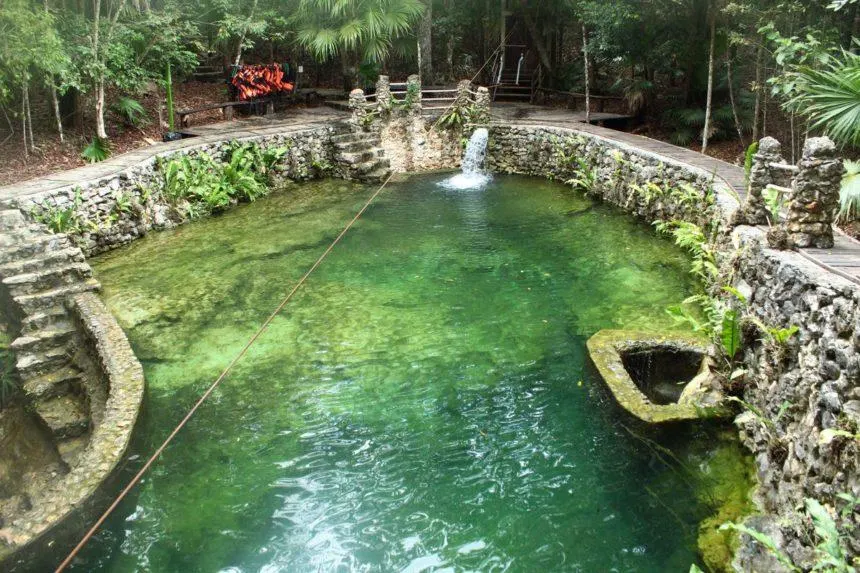
A great choice for adventure-oriented visitors, Boca del Puma combines cenote swimming with a full outdoor activity park, seven zip lines and guided ATV jungle tours. If you want to turn a cenote visit into a full day of activities, this is a strong option.
Entrance fee: 300 MXN ($16 USD); ATV & zip line combo from $60 USD
Opening hours: Monday–Sunday, 9 AM – 5 PM
Cenotes Between Playa del Carmen and Tulum
5. Cenote Cristalino

The first cenote you’ll encounter heading south from Playa del Carmen toward Tulum, Cenote Cristalino is an open-air cenote framed by exposed rock walls and dense greenery. A natural ledge about 4 meters (roughly 12 feet) high — with 5 meters of water depth below — makes it a popular jumping spot and a fantastic photography location. On my visit, a bridal shoot was actually underway.
Given its accessibility and proximity to the city, this one draws crowds. For a more peaceful experience, aim for weekday mornings.
Entrance fee: 150 pesos (approx. $7 USD)
6. Cenote Azul

In my personal view, Cenote Azul is the finest open cenote in the entire Riviera Maya. What sets it apart is its generous size, a scenic walking path that circles the perimeter, and shaded benches positioned throughout — perfect for soaking up the tranquility at your own pace.
Though it looks like a series of separate pools, Cenote Azul (not to be confused with Cenote Azul in Bacalar) is actually one continuous body of water nestled within a lush tropical setting. It’s ideal for spending an entire day swimming, jumping, and relaxing.
Entrance fee: 120 MXN
Insider tip: Steer clear of weekends to avoid the crowds.
7. Cenote Eden

Also known as Jardín del Edén, this is one of my personal favorites in the region. Though I tend to gravitate toward cave cenotes, Cenote Eden holds its own as a breathtaking spot.
It’s a large, circular pool ringed by vivid green vegetation. Through the crystal-clear emerald water, you can make out beautifully sculpted rock formations deep below the surface. On my last visit — a quiet weekday — I spent the entire day lounging on the spacious platform, working up the nerve to jump (success, eventually!), and watching divers prepare their dives.
Bring your snorkel gear — you won’t regret it.
8. Cenote Dos Ojos

Translating to “Two Eyes,” Cenote Dos Ojos is a legendary destination among the diving community. This flooded cave system has been explored since 1986 and continues to attract serious divers and underwater archaeologists alike.
The known cave network extends approximately 61 km with a maximum depth of around 118 meters (396 feet), placing it among the top ten longest underwater cave systems on Earth. Diving here is a significant undertaking requiring proper training, specialized gear, and a certified guide.
That said, you don’t need to be a diver to enjoy it — snorkeling and casual swimming are equally wonderful options. Divers can enter one cave opening and emerge through the other, which is how the cenote earned its name.
Note that paying in USD is an unfavorable exchange, so bring enough pesos.
Opening hours: 8 AM – 5 PM (diving hours may differ; check with your dive shop)
9. Cenote Taak Bi Ha

Relatively new to the scene, Taak Bi Ha is arguably the most spectacular cenote in the area. Access begins at the Dos Ojos entrance, but you’ll need to continue driving to reach the separate ticket booth. If you’re arriving by combi without a vehicle, transportation from the main entrance can be arranged on-site.
Entrance fee: 450 MXN
Diving is available with a certified guide at an additional cost — confirm pricing with your dive shop.
10. Cenote Chikin-Ha

Located about 40 minutes from Tulum, Chikin-Ha is actually a cluster of three distinct cenotes bundled under one entrance fee — making the price much more reasonable than it might initially appear.
Each cenote has its own character, which makes exploring all three genuinely fun. Since it hasn’t yet become widely known, you may find yourself nearly alone there, as I did on my visit.
The first is a wide, open cenote with lush surrounding vegetation — best photographed in the afternoon light. The second is a cave cenote where you can swim in from one side and exit through the other — a really cool experience. The third is primarily a ceremonial site with minimal swimming depth, but it’s visually striking and very photogenic.
Entrance fee: 350 pesos — well worth it.
11. Cenotes Casa Tortuga
About 15 minutes north of Tulum on the main highway, Casa Tortuga is a well-run cenote park that packs four distinct cenotes into one visit, two open-air and two cave cenotes. Each has its own personality: the larger ones have jumping platforms and are great for swimming and snorkeling alongside fish and turtles, while the smaller cave cenotes reward you with dramatic stalactites, stalagmites, and ancient rock formations.
Entry includes a guided tour of roughly an hour and 50 minutes in small groups, plus free time afterward to revisit your favorites. Zip-lining and buffet packages are also available. Bring cash, as card payments are unreliable on-site.
It’s not our favorite because you cannot visit freely on your own; you need to go with a guided tour and stay in a group. Besides, it’s very crowded. However, we have included it here because it’s very popular.
Entrance fee: from 400 MXN (includes guide, access to all 4 cenotes, and life vest)
Cenotes Near and Beyond Tulum
12. Cenote Cristal & Cenote Escondido

These two cenotes sit just south of Tulum, less than a mile from the town center, easily reachable by bicycle if you’re based in Tulum. One entrance fee covers access to both.
Cenote Cristal is a large, open cenote with rich vegetation reflected in its brilliant blue water. At 7 meters deep, it’s great for relaxed swimming, and a tall platform caters to those feeling adventurous. Diving is also available.
Cenote Escondido sits across the main highway and is an even more secluded gem. A couple of rope swings let you launch yourself into the water, or you can simply swim and take in the serene atmosphere.
Entrance fee: 120 pesos ($6 USD) for both cenotes; 200 pesos for divers
Opening hours: 8 AM – 5 PM
Getting there:
- By car: Take Ruta 307 south from Playa del Carmen — signs are posted on the right.
- By colectivo: Catch a minivan from Calle 2 Norte between Av. 10 and 15 in Playa del Carmen. Ask the driver to drop you at your cenote — about 35 pesos.
- By taxi: Approximately 350–400 pesos from Playa del Carmen.
13. Cenote Corazon

One of the most stunning cenotes in the Riviera Maya, Cenote Corazon is located just past Tulum on the road toward Chetumal. Wooden platforms are dotted around its rim — perfect for settling in with a book, soaking up the sun, or just taking in the beautiful surroundings at a relaxed pace. Divers love it for the elaborate rock formations and subterranean caves at depth, but it’s equally wonderful as a spot to swim or simply unwind.
Get there in the morning and aim for weekdays to enjoy it at its most peaceful.
Entrance fee: 150 MXN ($8 USD)
Opening hours: 9 AM – 4 PM daily
General Information & Practical Tips
Opening hours: Most cenotes open between 8:00–8:30 AM and close at 5:00–5:30 PM, every day.
Entrance costs: Typically range from 70 to 150 pesos for basic entry, with higher fees for additional activities.
What to Bring
Pack your swimsuit, a towel, and eco-friendly insect repellent — applied only after you leave the water. Sunscreen is the same: wear it outside only, never before swimming. A snorkel mask is worth throwing in the bag for certain cenotes. Dress lightly but wear closed, comfortable shoes to ward off insects.
Cenote Etiquette
As with any precious natural environment, a few ground rules help preserve these incredible places:
- No sunscreen or repellent before entering the water
- Take everything you bring in back out with you
- Do not touch, hang from, or disturb stalactites, stalagmites, or tree roots
- Avoid any behavior that could damage the surrounding ecosystem
Where to stay on the Riviera Maya
Here are a few hotels that we have picked along the Riviera Maya.
1. Secrets Akumal Riviera Maya — A stunning adults-only all-inclusive right in Akumal, with excellent food, swim-up rooms, and the famous turtle snorkeling bay practically on the doorstep. One of the best-rated resorts on the whole strip. View on Booking.com
2. Hotel Catalonia Riviera Maya — A large, well-run all-inclusive near Puerto Aventuras with consistently great reviews, multiple restaurants, beautiful pools, and a lively atmosphere. A solid choice for families or groups. View on Booking.com
3. Puerto Aventuras Hotel & Beach Club — A smaller, more relaxed option right on a calm, sheltered beach in the quiet marina village of Puerto Aventuras. Great food, a lovely reef for snorkeling just offshore, and a much more intimate feel than the big all-inclusives. View on Booking.com


